Advait Green Recycling

Bio Medical Waste Management

Healthcare Waste Is Not Ordinary Waste.

Segregation at source, barcoded collection, refrigerated transport and treatment at authorised Common Bio-Medical Waste Treatment Facilities - with the manifest trail the Bio-Medical Waste Management Rules, 2016 demand.

The Challenge

One Missegregated Bag Undoes an Entire Protocol

India's healthcare establishments generate over 700 tonnes of biomedical waste every day - infectious cultures, sharps, anatomical waste, contaminated plastics, expired pharmaceuticals and cytotoxic residues. Mixed with general waste, any one of these becomes a public health hazard and a documented regulatory violation.

The Bio-Medical Waste Management Rules, 2016 place the obligation squarely on the occupier: the hospital, clinic, laboratory, blood bank or veterinary institution generating the waste. Segregation into yellow, red, white and blue streams must happen at the point of generation, and the chain of custody must be traceable to final treatment.

Advait Green provides the full operating system around that obligation - colour-coded bins and liners, trained handling staff, barcoded bag tracking, dedicated transport and disposal through authorised Common Bio-Medical Waste Treatment Facilities, with annual returns filed on your behalf.

Bio Medical Waste Management

BMW Rules, 2016 Compliant

Barcoded, manifest-tracked collection

Waste Categories

Streams We Handle

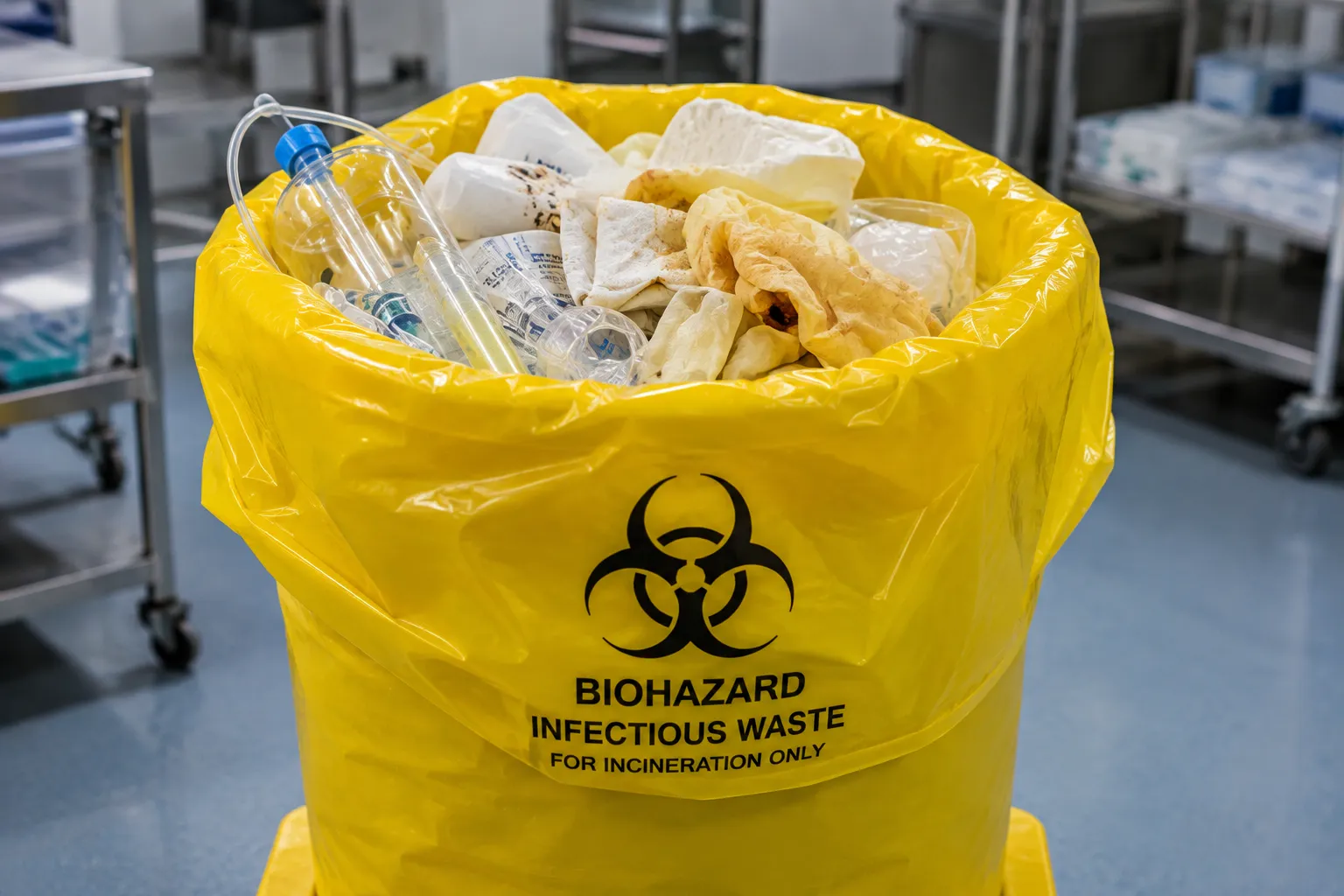
Yellow Category

Yellow Category

Human and animal anatomical waste, soiled dressings, microbiology and biotechnology cultures, expired and discarded medicines, chemical waste and cytotoxic drug residues. Treated by incineration or plasma pyrolysis at authorised facilities - never landfilled.

01 / 06
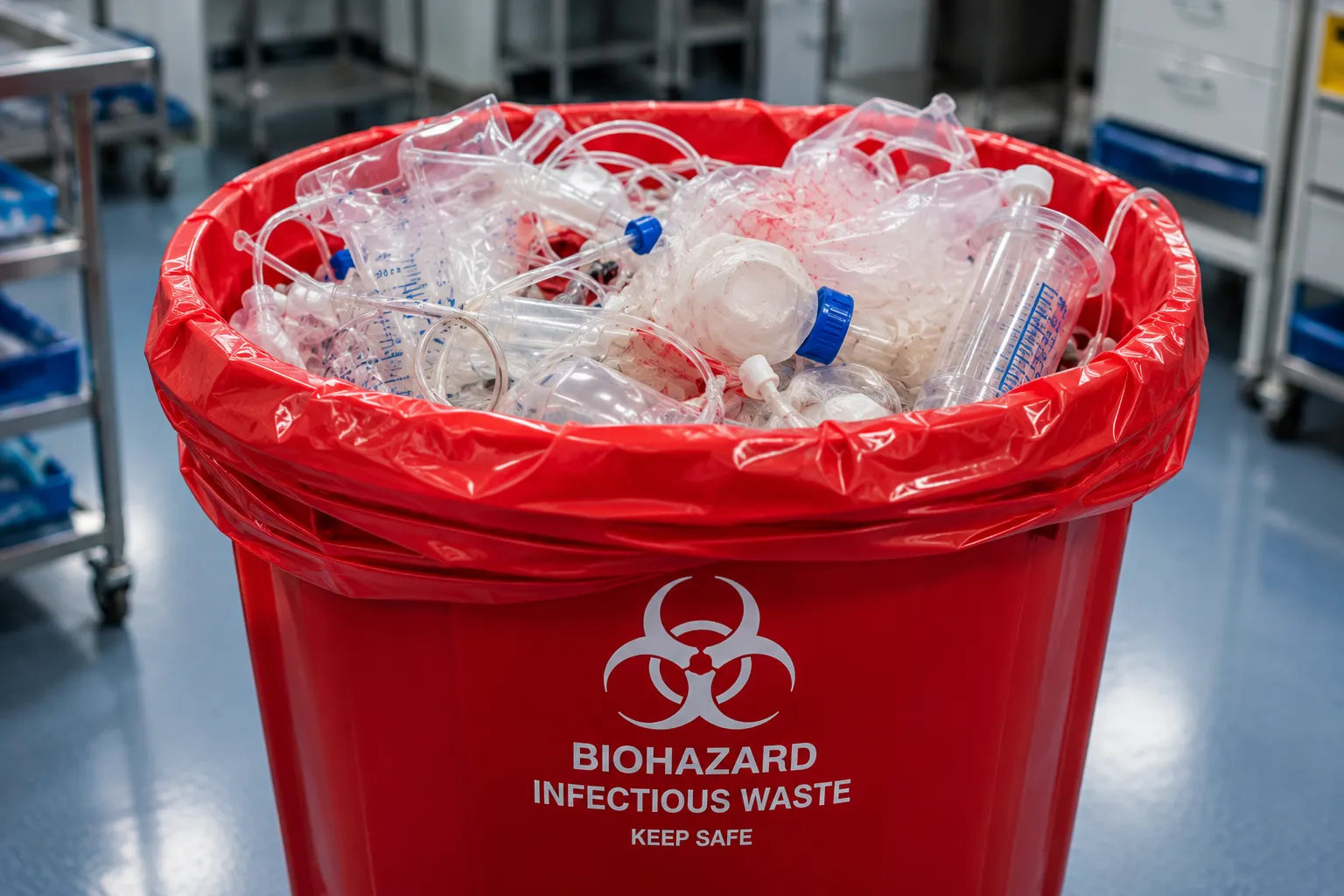
Red Category

Red Category

Contaminated recyclable plastics - IV tubing, catheters, urine bags, syringes without needles, vacutainers and gloves. Autoclaved or microwaved to sterilise, then shredded and channelled to authorised plastic recyclers.

02 / 06
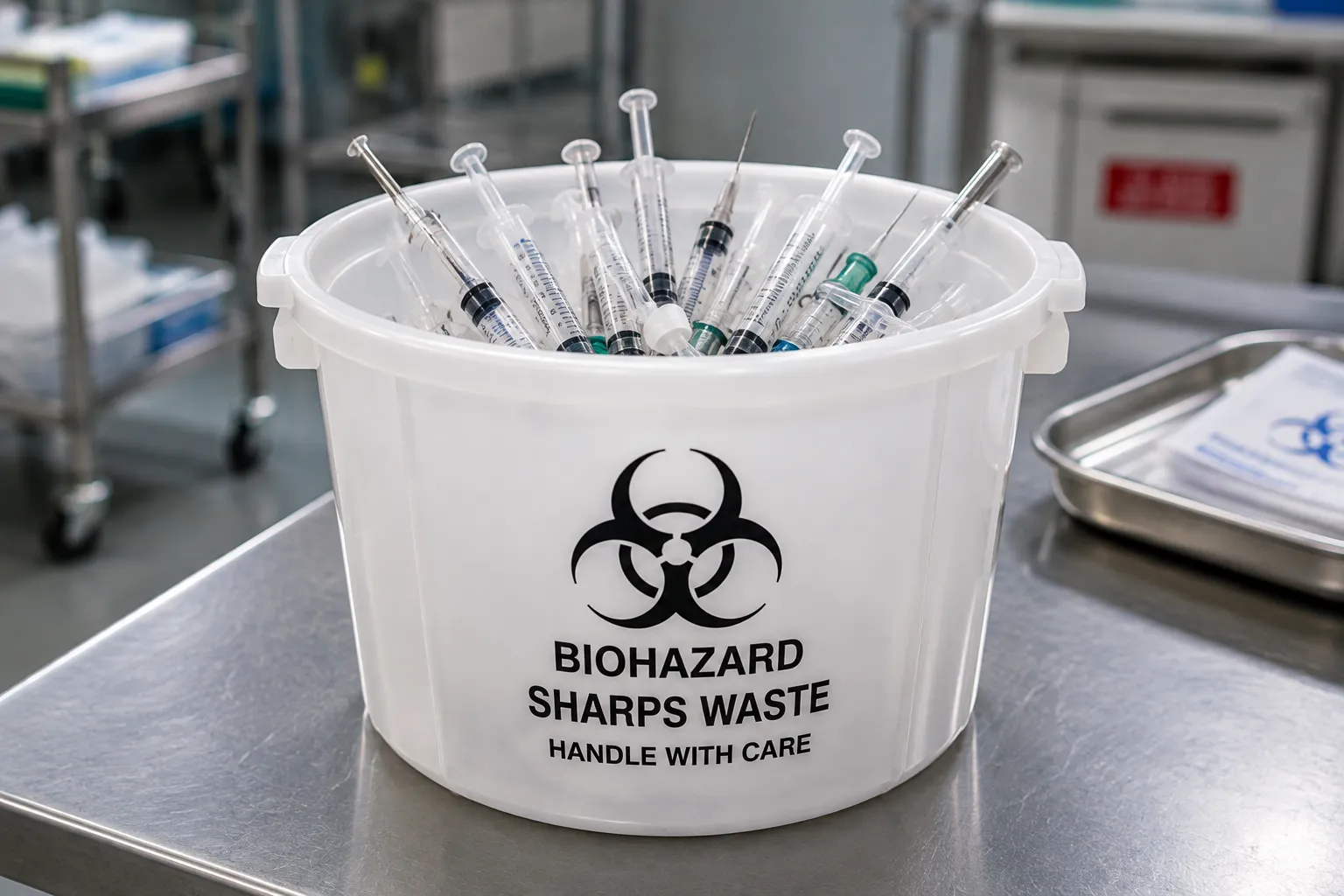
White Category (Sharps)

White Category (Sharps)

Needles, scalpels, blades, lancets and any contaminated sharp object capable of causing puncture injury. Collected in puncture-proof, leak-proof containers, then autoclaved and mutilated before final encapsulation or disposal.

03 / 06
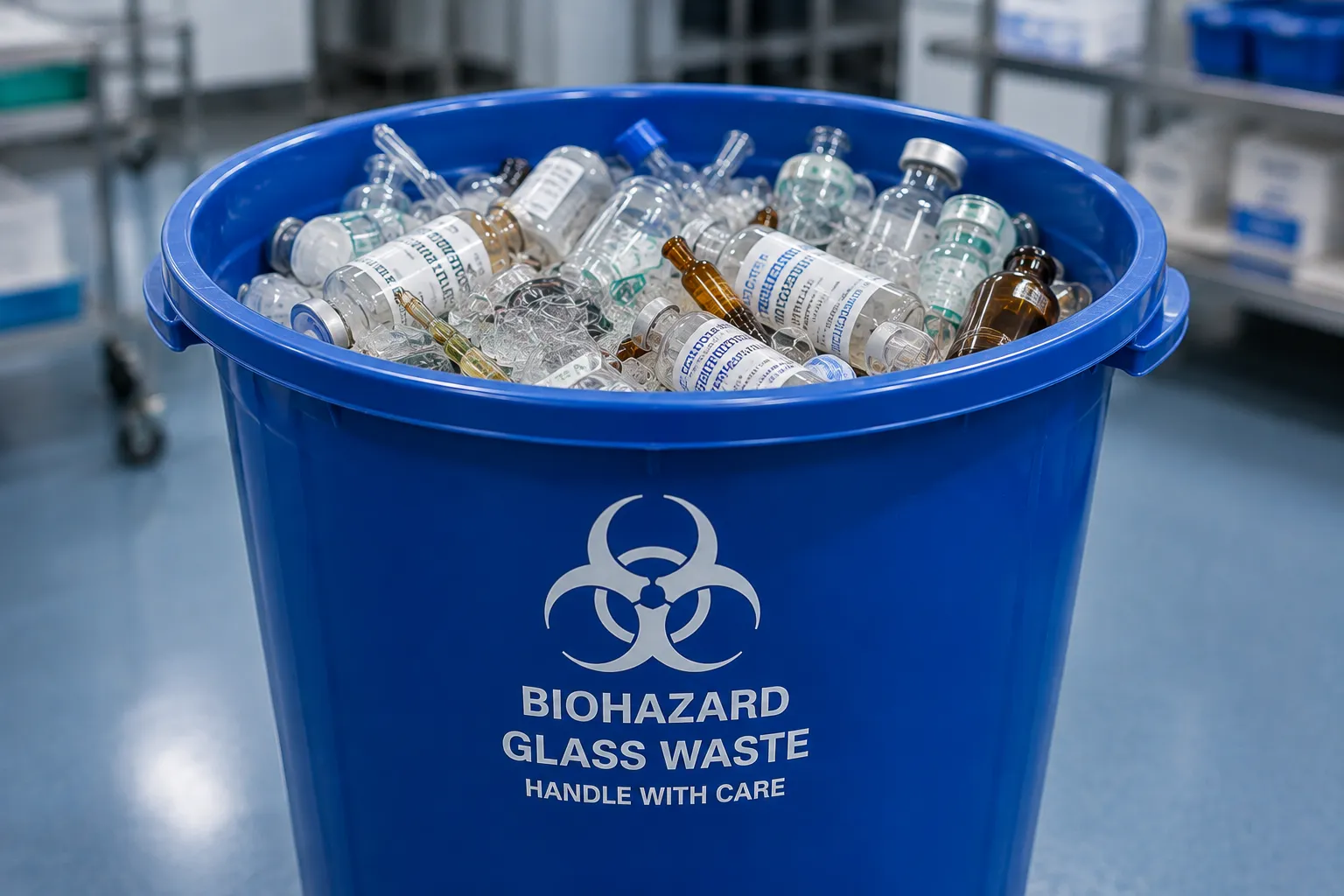
Blue Category

Blue Category

Broken and discarded contaminated glassware including medicine vials and ampoules, plus metallic body implants. Disinfected, washed and sent for recycling through authorised channels.

04 / 06
Laboratory & Research Waste

Laboratory & Research Waste

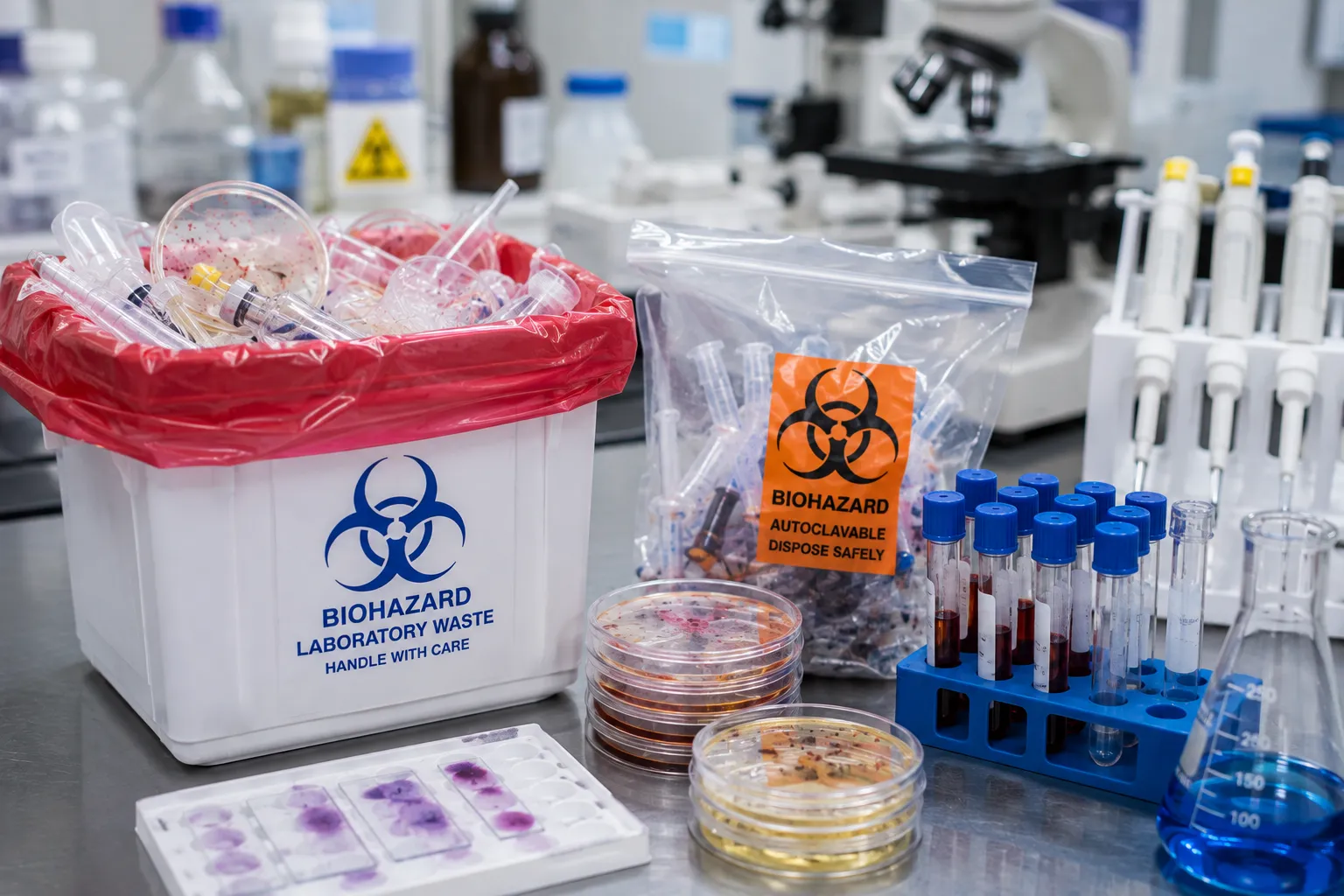
Culture plates, stocks, specimens, blood samples, live attenuated vaccines and residues from diagnostic and research laboratories. Pre-treated on site by autoclaving or disinfection before handover, as the Rules require.

05 / 06
Expired Pharmaceuticals

Expired Pharmaceuticals

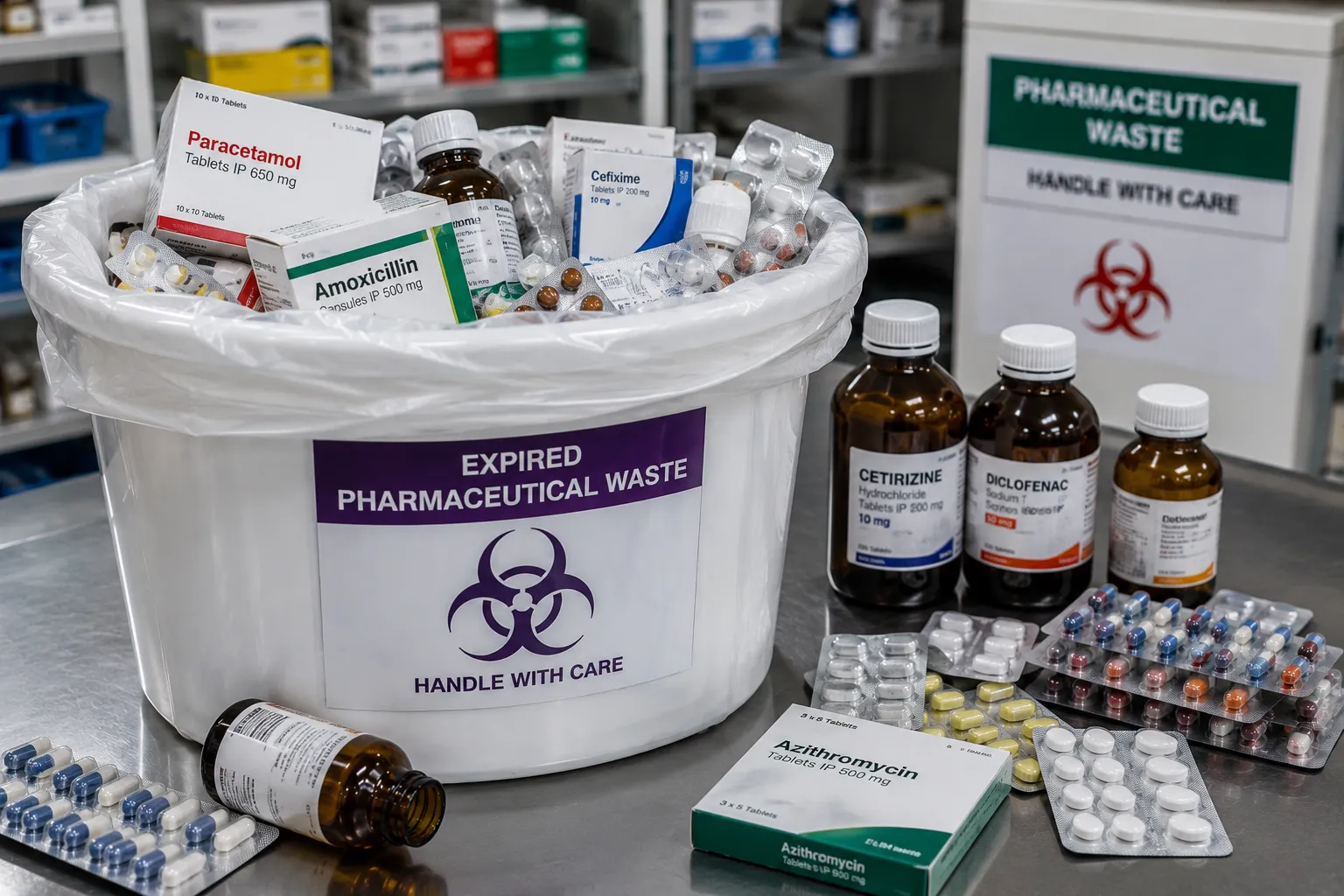
Time-expired, discontinued and returned medicines from hospital pharmacies, retail chemists and pharmaceutical distributors - destroyed under documented supervision with certificates of destruction issued.

06 / 06

How It Works

Segregation to Certified Treatment

01

Segregation at Source

Colour-coded bins, liners and sharps containers positioned at every generation point, with signage and staff training so the right waste enters the right stream first time.

02

Barcoded Tagging

Every bag is weighed and barcoded at collection, recording department, category, weight, date and handler - creating the traceability the Rules require.

03

Interim Storage

Waste held in a designated, access-controlled storage area for no more than 48 hours, in line with Schedule I timelines.

04

Dedicated Transport

Purpose-built, labelled and GPS-tracked vehicles authorised solely for biomedical waste - never shared with general waste collection.

05

Authorised Treatment

Incineration, autoclaving, microwaving or shredding at a CPCB-authorised Common Bio-Medical Waste Treatment Facility, matched to the waste category.

06

Documentation & Returns

Manifests, treatment certificates and the Form IV annual return prepared and filed - your audit file stays complete without your staff assembling it.

Why It Matters

What Structured Biomedical Waste Handling Delivers

Full Statutory Compliance

Segregation, storage timelines, transport, treatment and reporting aligned to the Bio-Medical Waste Management Rules, 2016 and their amendments.

Infection Control

Correct sharps handling and sealed containment protect nursing staff, housekeeping teams and waste handlers from needle-stick injury and exposure.

Complete Traceability

Barcoded bags and GPS-tracked vehicles mean every kilogram can be traced from the ward that generated it to the facility that treated it.

Accreditation Support

Documentation structured to satisfy NABH and NABL auditors, who examine waste management as a scored element of accreditation.

Reduced Environmental Load

Red-category plastics recovered for recycling after sterilisation instead of being incinerated - lower emissions, less material lost.

Trained Handling Staff

Periodic training and refreshers for your clinical and housekeeping teams, with attendance records maintained for inspection.

Hover to pause

Why Us

Why Advait Green for Bio Medical Waste

Trained handlers, barcoded traceability and authorised treatment partners - with the reporting burden lifted off your clinical staff.

4Colour-Coded Streams
48hrMaximum Storage Window
100%Barcoded Traceability
GPSTracked Transport Fleet
CBWTFAuthorised Treatment
Form IVAnnual Returns Filed
NABHAudit-Ready Records
DailyCollection Schedules
Regulatory

Bio-Medical Waste Management Rules, 2016

Under the Rules, the occupier - not the contractor - remains legally responsible for the waste generated on their premises. Authorisation from the State Pollution Control Board, annual returns in Form IV, accident reporting and maintained records are all obligations that sit with the healthcare establishment.

We operate as the system behind that responsibility: correct segregation infrastructure, documented handover at every stage, treatment through authorised facilities only, and the paperwork prepared in the form the board expects.

Discuss Your Facility's Requirement

Authorisation Assistance

Support with SPCB authorisation applications and renewals for your establishment.

Form IV Annual Returns

Category-wise quantity records compiled and filed within the statutory deadline.

Manifest Documentation

Signed handover manifests and treatment certificates retained for every consignment.

Staff Training Records

Scheduled training sessions with attendance registers maintained for inspection.

Ready to Fix Segregation Before Your Next Inspection?

Tell us your bed count, departments and current arrangement. We will propose a collection schedule, bin plan and documentation pack sized to your facility.